This piece was the first piece of creative writing I submitted for my creative writing workshop class in undergrad, and so it holds a special place in my heart. It could be said that the genesis of my writing style is best and most purely exemplified here, beneath all the original flaws and wordy bits I work to eliminate these days. Hope you enjoy.
Recently, I spoke with a friend on the phone who said: “I attended a wake today, he was young.” I commiserated with him for a short while, as he explained that this young man was a buddy of his who had likely taken too much, and too many, drugs; an unfortunate byproduct of a long and turbulent upbringing. During the call, and in fact whenever death and youth appear in conversation together, my idiom generating machine of a mind conjures forth the old phrase: “only the good die young.” The strange and sardonic qualities of the phrase had never occurred to me in any meaningful sense, likely because of how much of a cliche it has become for people grasping at boiler-plate responses to the discomfort of death in conversation. I had marveled above the hiss of the cell phone static at how such a phrase could be true, and yet how the topic of the most purportedly tragic funerals be youth. Was he not good if he died young? Certainly, there is little to mourn for a good life well lived. I found myself under exactly such pull: toward a low hanging, cliche response to the unpalatable dark moments of our call, but resisted. As usual, the phone call was over before I felt settled up, and I began to preemptively miss my friend, even before he said goodbye. Our calls are always so short, even when talking of funerals and depression.
While perusing wilted vegetables at the supermarket later, I concluded that the good may or may not die young, but more importantly, that a perceivably short life is a good life. Some of the vegetables’ assured me they also lived a good and short life with the brown and black blotches and bruises. When I try to think back to the brightest and most memorable moments in my young life, I find it difficult to remember them as time goes on. The painful ones stick, and the pleasurable evaporate. What remains is the feeling of temporariness in place of the memory itself; I remember how fleeting the good was, without remembering the content itself. I wish I could bring back my family dog, functionally the one sibling to an only-child. I wish I could have held my past loves longer under the starry, warm, wet nights. All that remains are how the shards of light struck her face a certain way in an apartment I used to live in, or the tilt of my dog-brother’s head when you dangled the word “treat?” All this returned in a deluge after the phone call, and I nostalgically recalled a certain feeling which permeated all these moments —even while I was in them: temporariness.
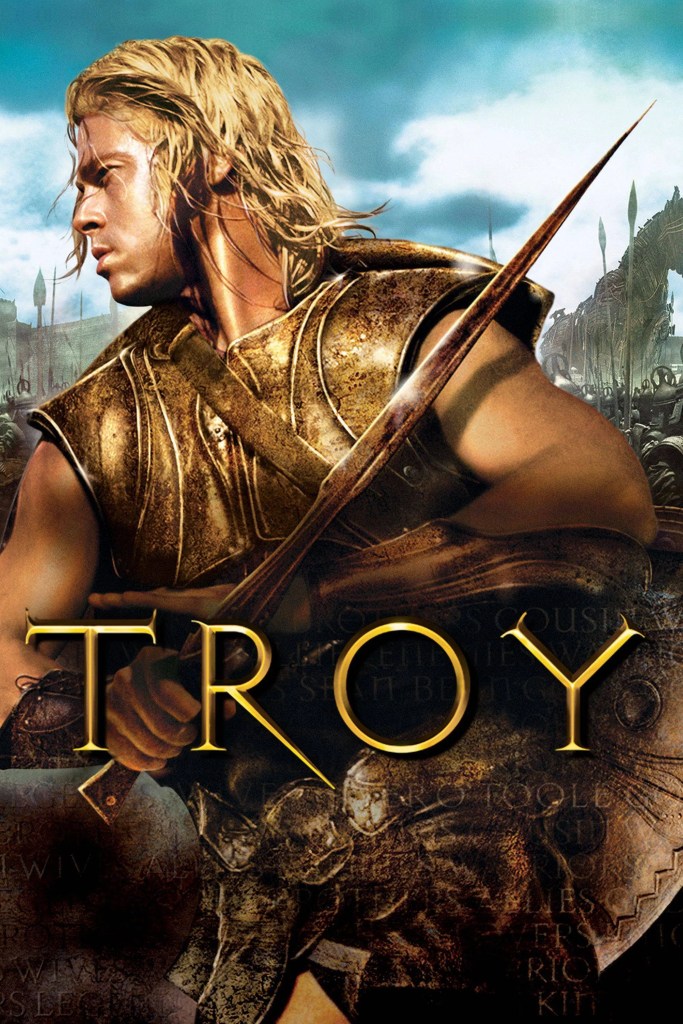
Wolfgang Peterson’s 2004 film Troy benevolently bestowed culture with the image of a chiseled, bronze-plated Brad Pitt clarifying how “The gods envy us. They envy us because we’re mortal, because any moment may be our last. Everything is more beautiful because we’re doomed.” If you didn’t lose track of his meaning due to the holy light radiating from his Hollywood makeup and unfairly sculpted bone structure, you may have caught the theme in his words. Peterson says, this feeling is most acute in our most cherished moments, that is, a moment’s worth is entrenched in its very temporality; quite profound for a movie with a 53% on Rotten Tomatoes. In any case, those moments which seem to pass so quickly and so fast that retrospect has us wonder if they ever happened at all, are the moments I yearn for: I hold puppies and women differently now. My life has been short, but twenty three years and five months is no short period of time. Yet, if I died, would it not be called a young man’s funeral? The good die young not because of the length of their life in any formal sense, but because their life is constructed of so many scenes of passion, inspiration, and depth that it can’t help but feel short. Consider that our memory fails us only when an encounter reaches the gravitational potential to rip us away from it, and pull us fully into the singularity of that moment. When I remember my brightest moment in life, I am in fact not remembering the truly brightest moment I have ever experienced, for that moment surely eclipsed memory and is beyond the reach of my recollection. Youth is no measure of time, but of experience and memory; a qualitative not a quantitative. The young could not remember the decades of wasted time in an office building the way the old can, nor the times when they feared and fumed, that is why they are young. It would seem that a life nearly unrememberable would seem to be the best life one could live. When I am reminded of this by the occasional phone call, and also how little of my life I can recall, I am at peace. If I am lucky, I will die “young.”
 The Sanford Dispatch